
Iran is not merely experiencing another wave of street protests. It is facing a crisis that strikes at the core of the Islamic Republic—and, for the first time in years, places the regime’s survival in real doubt.
Across Iran, demonstrations sparked by economic collapse and corruption have rapidly transformed into direct challenges to clerical rule. Security forces have responded with live fire, mass arrests, and communications blackouts. International reporting cites hundreds of people killed and thousands detained. Internet shutdowns point to a regime determined to suppress not only dissent, but proof of it.
Iran has behaved this way before. What has changed is the strategic environment—and the growing sense among Iranians that the system itself is failing.
Still, one must be clear-eyed: Iran’s leaders will not go quietly. They do not see themselves as ordinary autocrats clinging to power. In their own theology, they see themselves as executing Allah’s will.
A Regime That Sees Repression as Divine Duty
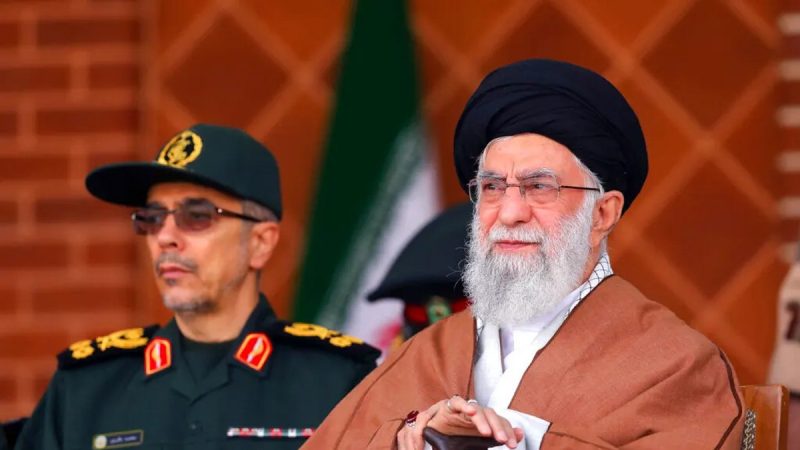
Since 1979, the Islamic Republic has framed its authority through velayat-e faqih—the rule of the Islamic jurist. Under this doctrine, Supreme Leader Ayatollah Ali Khamenei is not simply a political figure. He is the guardian of an Islamic revolution believed to be divinely sanctioned.
That theological worldview directly shapes how the regime responds to dissent. When Iranian security forces fire into crowds, the regime does not see itself as suppressing political opposition; it sees itself as crushing heresy, sedition, and rebellion against God’s order. Protesters are routinely labeled ‘corrupt on earth,’ a Quranic phrase historically used to justify severe punishment.
Public condemnation and moral appeals alone will not move Tehran. Its rulers believe endurance, sacrifice, and violence are virtues—especially when used to preserve the revolution.
Even regimes driven by religious certainty can collapse once their power structures fracture.
Why this moment differs from 2009—or 2022
Iran has seen mass protests before. In 2009, the Green Movement threatened the regime after a disputed election. In 2022, nationwide protests erupted following the death of Mahsa Amini, a 22-year-old Iranian woman who died in morality-police custody after being detained for allegedly violating Iran’s hijab rules. Each time, the regime survived.
Several factors suggest this moment is different.
First, the economy is far worse. Iran faces sustained currency devaluation, unemployment, and inflation that has crushed the middle class and hollowed out state legitimacy. That pressure is compounded by a deepening water crisis that has crippled agriculture, strained urban life, and fueled unrest in multiple provinces. Economic despair is no longer peripheral; it now sits at the center.
Beyond economics, Iran’s external deterrence has eroded. The war with Israel in 2025 inflicted real damage. Senior Iranian commanders were killed. Air defenses were penetrated. Missile and drone infrastructure was disrupted. Iran’s aura of invulnerability—carefully cultivated over decades—was badly shaken.
At the same time, Iran’s proxy network is under strain. Hamas has been devastated. Hezbollah has suffered significant losses and now faces domestic pressure in Lebanon. The Houthis remain disruptive but isolated. Tehran’s so-called ‘axis of resistance’ looks less like an unstoppable force and more like a series of costly liabilities.
Most importantly, the regime’s coercive apparatus is under stress. And this is where the future of Iran will be decided.
Watch the IRGC and the Basij—the outcome may hinge on their choices
No institutions matter more right now than the Islamic Revolutionary Guard Corps (IRGC) and its paramilitary arm, the Basij.
Often described as the regime’s ‘eyes and ears,’ the Basij are not a conventional military force but a nationwide population-control and internal surveillance network. Embedded in neighborhoods, universities, factories, and mosques, they monitor dissent, identify protest organizers, and move quickly to intimidate or detain them—often before demonstrations can spread.
During past unrest, including the 2009 Green Movement and the 2022 Mahsa Amini protests, Basij units played a central role in suppressing resistance through beatings, arrests, and close coordination with IRGC security forces. Their value to the regime lies not in battlefield strength, but in omnipresence and ideological loyalty.
Their mission is to control dissent at the local level—before it becomes national. As long as the Basij remain loyal and effective in towns, neighborhoods, and campuses, the regime can contain unrest. If they hesitate, defect, or stand aside, Tehran’s grip weakens rapidly.
The Basij are the real instrument of population control. If the regime is forced to deploy the IRGC widely for internal order, it signals that local control has failed—and that the system is under far greater strain.
The Trump administration should be careful not to hand Tehran the propaganda victory it wants. Loud declarations about regime change from Washington risk delegitimizing Iranian voices. Support the people. Isolate the killers. Let the regime own its crimes.
The IRGC, by contrast, controls the military and functions as an economic empire. Beyond internal security, the IRGC also shapes Iran’s foreign policy—overseeing missile forces, regional proxies, and external operations. It exists to defend the revolution abroad, while the Basij exists to control society at home.
Over the past three decades, the IRGC has embedded itself in Iran’s most important industries—energy, construction, telecommunications, transportation, ports, and black-market finance. Entire sectors of the Iranian economy now depend on IRGC-controlled firms and foundations.
This creates a decisive tension. On one hand, the IRGC has every reason to defend the regime that enriched it. On the other, prolonged instability, sanctions, and economic collapse threaten the very assets the Guards control. At some point, self-preservation may begin to compete with ideological loyalty.
That is why Iran’s future may depend less on what protesters do in the streets—and more on whom the IRGC ultimately chooses to back.
Three outcomes appear plausible.
The first is repression. The Basij could maintain local control while the IRGC backs the Supreme Leader, allowing the regime to crush dissent, and impose order through overwhelming force. This would preserve the Islamic Republic, but at the cost of deeper isolation and long-term decay.
The second is continuity without clerical dominance. A ‘soft coup’ could sideline aging clerics in favor of a military-nationalist leadership that preserves core power structures while shedding the regime’s most unpopular religious figures. The system would remain authoritarian—but altered.
The third is fracture. If parts of the Basij splinter or stand aside—and the IRGC hesitates to intervene broadly—the regime’s internal control could unravel quickly. This is the least likely outcome, but the most transformative—and the one most favorable to long-term regional stability.
Revolutions tend to succeed not because crowds grow larger, but because security forces eventually stop obeying orders.
America’s strategic objective: clarity without ownership
The United States must be disciplined about its goal.
America should not seek to ‘run Iran,’ redraw its culture, or impose a leader. That approach has failed elsewhere. But neither should Washington pretend neutrality between an abusive theocracy and a population demanding dignity.
Our strategy is clear:
Prevent Iran from acquiring nuclear weapons.
End Iran’s export of terrorism and proxy war.
Push Iran toward regional stability rather than disruption.
Encourage a government that derives legitimacy from its people, not coercion.
Achieving that outcome requires pressure without provocation.
What the Trump administration and allies should do now
First, expose repression relentlessly. Iran’s internet blackouts are a weapon. The U.S. and allies should support every lawful means of keeping Iranians connected and atrocities visible.
Second, target the regime’s enforcers—not the public. Sanctions should focus on specific IRGC units, Basij commanders, judges, and security officials responsible for killings and mass arrests. Collective punishment only strengthens regime propaganda.
Third, signal consequences—and off-ramps. Those ordering violence must know they will be held accountable. Those who refuse unlawful orders should know the world is watching—and remembering.
Fourth, deter external escalation. Tehran may try to unify the nation through confrontation abroad. Strong regional missile defense, maritime security, and allied coordination reduce the regime’s ability to change the subject with war.
Finally, do not hand Tehran the propaganda victory it wants. Loud declarations about regime change from Washington risk delegitimizing Iranian voices. Support the people. Isolate the killers. Let the regime own its crimes.
The bottom line
Iran’s rulers believe they are carrying out divine will. That makes them dangerous—and stubborn. But it does not make them immortal.
Every revolutionary regime eventually faces a moment when fear stops working, money runs out, and loyalty fractures. Iran may be approaching that moment now.
The outcome will not be decided by speeches in Washington, but by choices in Tehran—especially inside the IRGC.
If the Guards conclude their future lies with the people rather than the clerics, Iran could finally turn a page. If they do not, repression will prevail—for a time.
America’s task is not to force history, but to shape the conditions under which it unfolds—with care, strategy, and moral clarity.
Because when the Islamic Republic finally faces its reckoning, the world must be ready—not to occupy Iran, but to ensure that what replaces the tyranny is not simply the same regime in a different uniform.